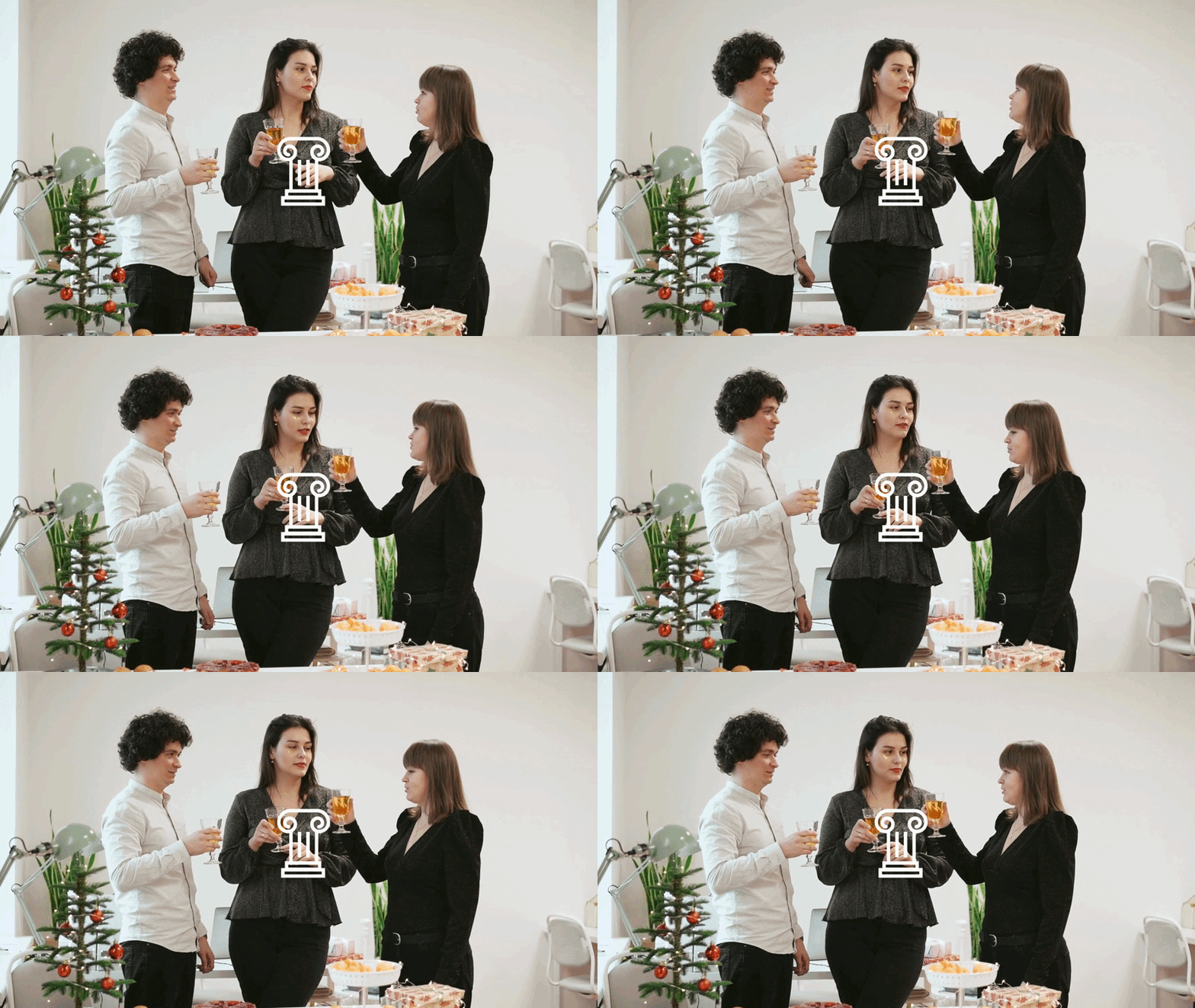
Micro-events: the trend that is transforming team building
For years, team building has been too much like a still photo: a big annual event, a lot of logistics and the hope that that single moment will resolve tensions, motivate and reinforce culture. The reality is that today's teams don't work like that. They work in shorter cycles, relate more fluidly and need frequent experiences, not isolated milestones. This is where micro-events are taking center stage.
The question that more and more companies are asking is simple: what if the key to a united team were not one big event... but many small ones?
The power of the small: Why they work
Micro-events fit into an obvious cultural change: people no longer wait for “the big day”, but rather frequent moments that remind them why it's worth working where they work. This shift responds to three factors that are marking current leadership:
- Rhythm and attention. The agendas are saturated. A short, well-designed and easy-to-execute experience is much more likely to be integrated into everyday life than an annual macro-event.
- Living culture. You can't build a sense of belonging once a year. Strong cultures are nourished by regular rituals: team breakfasts, micro-challenges, express creativity sessions, seasonal themed experiences.
- Customization. Teams have been fragmented into interests, shifts, cultures and ways of working. Micro-events allow us to modulate the experience so that each squad or department has its own, without forcing a single format for everyone.
From “event” to “ritual”: the new language of team building
The interesting thing about micro-events isn't their size, but how they redefine the experience. It's no longer about “organizing something”, but about creating rhythms that keep the team connected. When a company turns these dynamics into rituals, the impact changes completely.
Examples that are already working in companies in different sectors:
Creative micro-activations. A 15-minute challenge to solve an absurd briefing, a dynamic inspired by escape rooms, or a short improvisational activity to break inertia before an important meeting.
Express wellness experiences. 10-minute Breathwork, guided stretching, mindfulness pills, or urban micro-routes to go for a walk together. Simple to implement, powerful for the team's emotional climate.
Fast but memorable celebrations. Weekly achievements, small victories or team anniversaries converted into symbolic experiences: from thematic tastings to unique rituals that reinforce identity.
Experiential micro-formations. Not all learning requires a classroom and a speaker. 20-minute workshops to practice soft skills, gamified dynamics or express labs to test ideas.
Each of these proposals maintains a common pattern: short time, high impact, zero friction.
How to design micro-events that generate real value
So that this tendency does not stop at just “doing small things”, a clear logic should be followed:
Diagnose the timing of the equipment. There's no point in launching creative micro-events if the team is exhausted. Or well-being if what is lacking is strategic alignment. Each ritual must respond to a real need.
Define a purpose per micro-event. A phrase. An intention. “Connect before the sprint”, “Lower your heart rate”, “Celebrate the week”, “Release tensions”. This guides the design and avoids activities that seem fun, but don't add up.
Take care of the execution. A micro-event doesn't mean improvisation. It should feel simple, but not trivial. The key is in the detail: the tone, the space, the narrative and the consistency.
It integrates leaders. When middle managers and managers participate—or better yet, lead—these rituals, culture becomes more transversal and credible.
Measure what matters. A battery of KPIs is not needed. Observe energy, participation, and subsequent conversation. If the team starts asking for those moments, you're doing fine.
A Future of Continuous Experiences
Micro-events don't replace great experiences; they give them context. When a team experiences frequent rituals, the big annual event ceases to be a patch and becomes a highlight. Culture keeps moving, connections are strengthened and team building ceases to feel like an obligation to become something expected.
The trend is clear: what unites teams is not spectacularity, it's consistency. Companies that understand this will lead a new model of internal relationship where experience is not an event, it is a shared language.
If you want to work on this line for other articles or explore micro-event formats by type of equipment, let me know and we'll develop it.