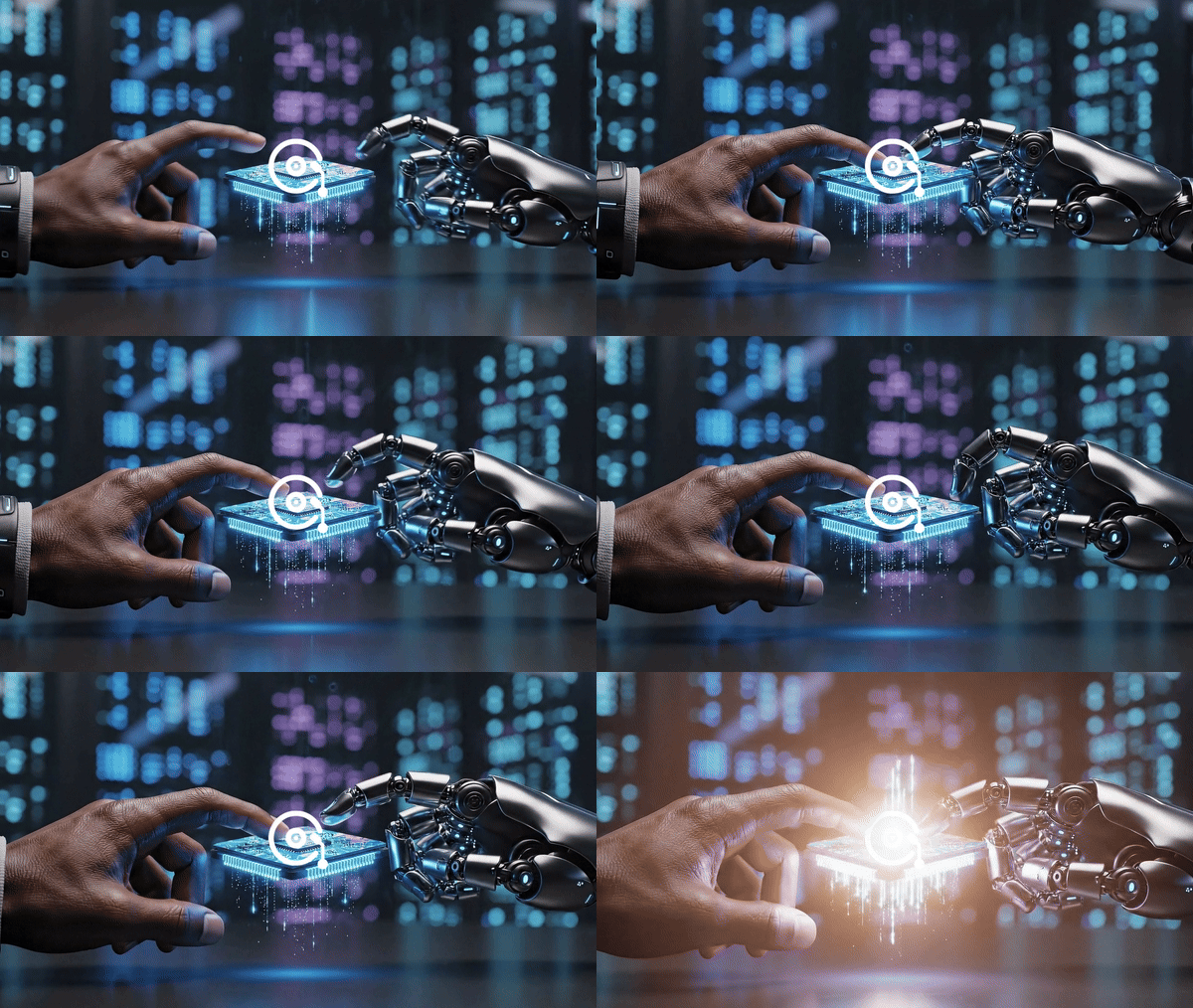
AI + Creativity: How Agencies Are Integrating Artificial Intelligence Without Losing the Human Essence
The conversation is everywhere: Is AI going to “eat” creativity? The question sounds dramatic, but it's the one that many creative teams ask themselves when they see Artificial Intelligence creep into every phase of the process. However, perhaps the important question is not whether AI will replace something, but rather how it is transforming the way we create, collaborate and execute ideas within agencies.
The agencies that are navigating this transition more intelligently are not the ones chasing the hype, but those that understand that integrating AI doesn't mean extinguishing the human spark, but giving it space to shine where it really matters.
AI is solving work... not creativity
There's an uncomfortable reality: For years, agencies have burdened creative teams with repetitive tasks, slow processes, and bureaucracies that shut down more ideas than they turned on. AI isn't here to replace talent, but to dismantle those layers of friction.
- Automation of low-risk parts: adaptations, versions, resizing, functional copies.
- Real-speed insight analysis: deep social listening, cultural patterns, emerging behaviors.
- Immediate prototyping: arts, previsualizations or mockups that allow you to validate ideas without wasting the whole day.
This is not creativity. It's what stood between idea and creativity. Agencies that understand this are freeing up high-value hours that were previously wasted.
The new role of the creative: less “operator”, more “architect”
This is where the interesting twist comes in. AI forces the creative to level up. Whoever only executes loses. Whoever designs, connects and tells stories, wins.
Agencies are redefining creative roles toward more strategic ones:
- Creatives who master prompts as a new form of art direction.
- Teams that mix lateral thinking with generative tools to explore 50 routes where before there was only time for one.
- Conceptualizers that use AI to test narratives, detect breaks and anticipate how an idea will behave in different channels.
What changes is not creativity, but the depth with which you work. AI amplifies; it doesn't invent for you.
Where the human essence remains irreplaceable
Here we must be clear: AI does not feel contradiction, irony, or cultural conflict. You don't know when an idea has “skin”. He doesn't understand emotional timing or codes that only work because they come from people.
Campaigns that transcend tend to have things that no machine can fully simulate:
- A courageous point of view.
- A sensitive reading of the context.
- A story that touches a chord.
- An imperfection that makes the piece memorable, not perfect.
The agencies that are getting it right don't try to make AI generate these things, but they use it to go further once they have the human essence.
Real risk: becoming replaceable due to lack of judgment
The threat is not in AI. It is in the agencies that use it as a creative shortcut and not as a strategic accelerator. If an idea can be made by any generic tool, then the problem isn't the tool: it's the absence of judgment.
Agencies that are losing ground often fall into one of these errors:
- Confusing speed with value.
- Deliver “ok” parts because “the AI did it that way”.
- Believing that producing more content is producing better content.
- Forget that people don't remember outputs: remember experiences.
The human essence is lost when discretion is delegated, not when execution is delegated.
Smart integration: How the most advanced agencies are doing it
At this point, we can already see a pattern among agencies that integrate AI without diluting their creative DNA:
1. Hybrid, non-automated processes
There are phases where AI provides (divergent ideation, analysis, prototyping) and others where it is left over (insight, tone, emotional decisions). More mature agencies are defining what tasks are human by design.
2. Formed teams, not replaced
Training in prompts, generative thinking and new methodologies. Not to turn everyone into “prompt engineers”, but so that no one is left behind.
3. Culture that rewards the human
Decisions based on creative sensitivity, not on automatic outputs. AI is input; creative direction is decision.
4. AI as the customer's co-pilot
The best agencies are doing pedagogy. They teach customers when AI helps, when it doesn't, and what impact it can have on timing, costs and quality. That builds trust, not dependency.
The future: more humane agencies precisely because they use AI
The paradox is this: the more AI advances, the more value intuition, narrative and original thinking have. And that's the real opportunity for agencies: to use technology to free up mental and emotional space, to rethink, question, play and risk like we couldn't before.
The human essence doesn't disappear with AI. It disappears with complacency. And it is empowered with judgment, purpose and courage to use tools without letting them use teams.